
Caps are part of daily life for millions of people — for sun, style, or a bad hair day. Here's a simple, honest look at what really happens to your hair underneath one.
 Everyday Cap Wear
For most people, does wearing a cap cause hair loss is a common concern, but wearing a cap on its own does not usually cause hair loss. Hair fall is more often linked to genetics, hormonal changes, stress, poor scalp care, and certain health conditions. However, wearing a very tight cap for long hours every day may cause scalp discomfort and put unnecessary stress on the hair.
Your hair grows from follicles fed by blood vessels under the skin. A cap sitting on top of your head does not block this blood supply, so it cannot "starve" your hair.
Wearing a tight or dirty cap for long hours can trap sweat and oil, which may irritate the scalp and, in some cases, lead to weaker hair strands over time.
A cap worn extremely tight, especially over years, can add gentle pulling force on the hairline. This is closer to traction alopecia than to ordinary cap use.
Genetics, age, stress, illness, and nutrition are the leading reasons people lose more hair than usual — far more common than the cap sitting on their head.
A lot of people ask whether is cap good for hair in the first place. The honest answer is that it depends on how you wear it. A cap can actually protect your hair from sun, dust, and pollution. But worn the wrong way, it can also work against you. Here's the balance:
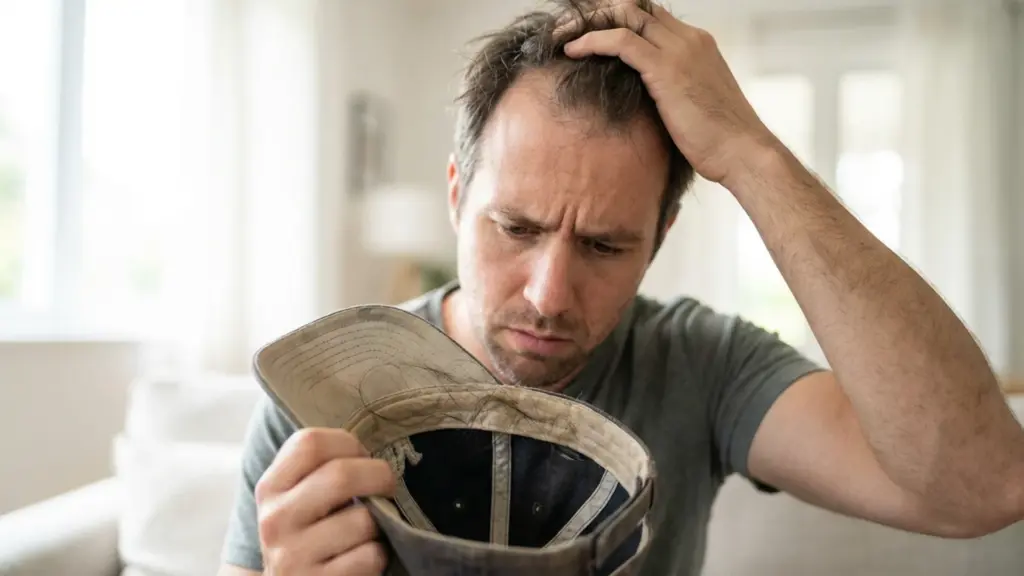
Choose a cap that sits comfortably without pressing hard on your hairline. It should stay on without needing to be pulled tight.
Wash your cap regularly. A cap that collects sweat and oil can irritate the scalp over weeks of repeated wear.
Give your scalp cap-free hours during the day, especially indoors, so it isn't covered and damp for long stretches.
Avoid wearing a cap over wet or sweaty hair, as damp conditions near the scalp can encourage irritation.
Cotton or mesh caps allow more airflow than tightly woven synthetic ones, keeping the scalp cooler and drier.
Itching, redness, or noticeably more shedding than usual are cues to change your cap habits or check in with a doctor.
Read the full breakdown of the science, the myths, and the everyday habits that actually protect your hair — cap or no cap.